| Key Facts | Details |
|---|---|
| Legal states for mobile casino play | NJ, PA, MI, DE, WV, CT |
| iOS App Store real-money gambling | Permitted in legal US states |
| Android casino apps | APK direct download only — not Google Play |
| Minimum connection for live dealer | 10 Mbps download, stable |
| 5G smartphone penetration (US, 2026) | ~68% of active smartphones |
| Apple Pay / Google Pay at US casinos | Available at select licensed operators |
| Mobile game library vs desktop | Typically 80–95% of full catalog |
| Fastest mobile withdrawal | Crypto: under 1 hour |
| Average mobile session length (US) | 22–28 minutes |
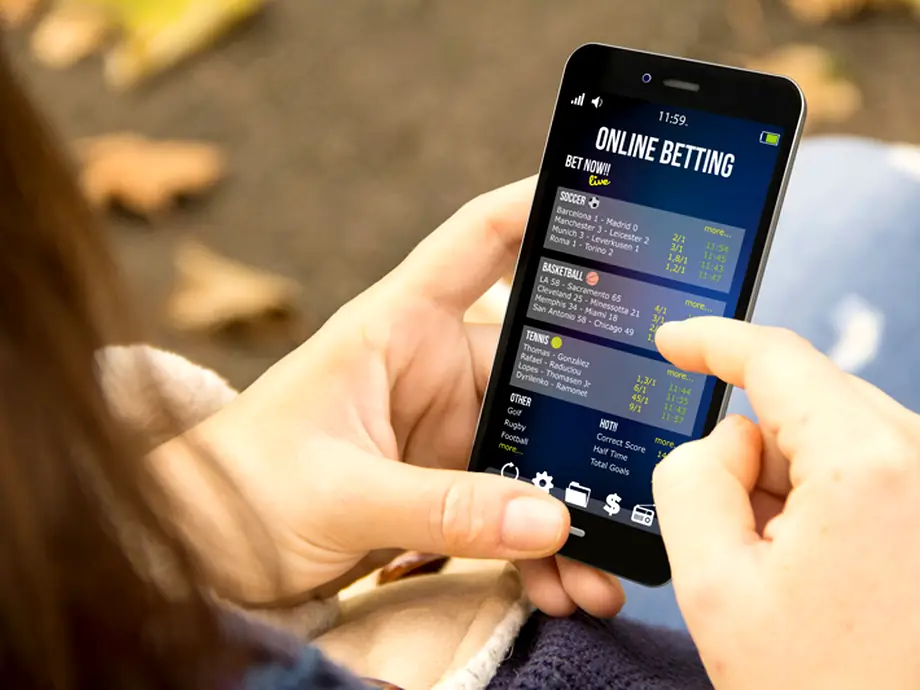
Over 70% of real-money casino sessions in the US now happen on a phone or tablet. The shift is not just about convenience — mobile-specific features, payment integrations, and app performance have become primary factors when comparing licensed operators. This guide covers how mobile access actually works across iOS and Android, what you lose and gain compared to desktop, and what to check before downloading anything.
How Mobile Casino Access Works in the United States
Mobile casino access in the US is tied directly to state licensing. A casino app or mobile site can only legally accept real-money bets from players physically located in one of the six states where online casino gambling is licensed: New Jersey, Pennsylvania, Michigan, Delaware, West Virginia, and Connecticut.
Geolocation verification runs at every login — not just account creation. The casino's geolocation software (GeoComply is used by virtually all licensed US operators) checks your device's GPS, Wi-Fi triangulation, and IP address simultaneously. Being near a state border can trigger false location flags; moving away from the border and restarting the app resolves it in most cases.
VPNs do not bypass geolocation checks. GeoComply specifically detects VPN usage and flags the session. Using a VPN to access a licensed casino from outside a legal state violates the terms of service and results in account suspension.
Native App vs. Mobile Browser: Which One to Use
Both options work, but they differ in ways that matter depending on what you play.
| Feature | Native App | Mobile Browser |
|---|---|---|
| Game library | 80–90% of full catalog | 90–100% of full catalog |
| Load speed | Faster (cached assets) | Slower on first load |
| Push notifications | Yes | No |
| Biometric login | Face ID / Touch ID | Not available |
| Storage required | 60–250 MB | None |
| iOS availability | App Store (legal states only) | Full access |
| Android availability | APK from casino site | Full access |
| Live dealer performance | Optimized video handling | Depends on browser engine |
| Updates | Automatic (iOS) / manual APK (Android) | Always current |
The native app wins on performance and convenience: biometric login, push notifications for bonus alerts, and faster load times after install. The mobile browser wins on game selection — some titles use desktop-only rendering engines that never made it into the app version.
For slot players, the app is the better choice. For players who want access to every table game variant or specific video poker pay tables, the browser version is more complete.
iOS vs. Android: Different Installation Rules
The platform you use changes how you install and update casino software — and the security implications differ.
iOS (iPhone / iPad): Apple permits real-money gambling apps in the App Store for licensed operators in states where online gambling is legal. Search the App Store directly for the casino's name. The app only appears if your App Store region is set to the US and you are physically in a legal state. Apple's review process means iOS apps are generally more stable and receive faster security patches.
Android (all manufacturers): Google Play does not list real-money gambling apps for US users. To install a casino app on Android, download the APK file directly from the casino's website and enable "Install from unknown sources" in your device settings. This is a standard process — not a security risk if you are downloading from a licensed operator's official site — but you must manually check for and install updates.
| Factor | iOS | Android |
|---|---|---|
| Installation source | App Store | Casino website (APK) |
| Update method | Automatic (App Store) | Manual download required |
| Security review | Apple review process | Self-certified by casino |
| Device recommendation | iPhone 12 or newer | Android 10 or newer |
| Biometric login | Face ID / Touch ID | Fingerprint / Face Unlock |
One practical difference: iOS apps tend to have smaller file sizes and smoother animations due to Apple's hardware-software integration. On Android, performance varies by device — a mid-range phone from 2023 may struggle with live dealer video streams that run without issue on an iPhone 14 or newer.
Mobile Game Selection: What's Available and What Gets Cut
Not every game in a casino's desktop library makes it to mobile. Older slot titles built in Flash (now defunct) or using desktop-only rendering engines are absent. Newer HTML5 games are mobile-native by design — all major providers have built mobile-first since 2021.
What's typically available on mobile:
- All HTML5 slots (the majority of titles from 2020 onward)
- Standard blackjack, roulette, and baccarat variants
- Live dealer tables (Evolution Gaming, Ezugi)
- Video poker (most variants)
- Scratch cards and instant win games
What's sometimes missing:
- Older slot titles built before 2018
- Some multi-hand video poker variants
- Certain 3D slots with complex desktop rendering
- Full poker room client (some rooms require desktop for tournament registration)
Typical game count by device at a licensed US operator:
| Device | Slots | Table Games | Live Dealer | Video Poker |
|---|---|---|---|---|
| Desktop | 600–900 | 40–80 | 60–120 | 20–40 |
| Mobile app | 500–800 | 30–60 | 50–100 | 15–30 |
| Mobile browser | 550–850 | 35–70 | 55–110 | 18–35 |
The gap between desktop and mobile has narrowed significantly since 2023. Most new releases from NetEnt, IGT, and Evolution are mobile-first by design and perform identically across devices.
Live Dealer Games on Mobile: Connection Requirements
Live dealer games stream real-time video of a physical dealer at a studio table. On mobile, this creates specific technical requirements that slot play does not.
Minimum requirements for stable live dealer play:
- Download speed: 10 Mbps (stable, not peak)
- Upload speed: 2 Mbps
- Latency: under 100ms
- Screen size: 5.5 inches or larger for comfortable play
Connection type and live dealer performance:
| Connection | Typical Speed | Stream Quality |
|---|---|---|
| 5G (urban) | 200–900 Mbps | Excellent — 1080p |
| 5G (suburban) | 50–200 Mbps | Very good — 720p to 1080p |
| 4G LTE (strong signal) | 20–80 Mbps | Good — 720p |
| 4G LTE (weak signal) | 5–15 Mbps | Acceptable — may buffer |
| Home Wi-Fi (congested) | Variable | Inconsistent |
| 3G | Under 5 Mbps | Not recommended |
By mid-2026, approximately 68% of active smartphones in the US are 5G-capable. On 5G, live dealer streams run at full 1080p without buffering. The practical issue is not speed but latency — a congested home Wi-Fi network with 200 Mbps download but 80ms latency performs worse than a 5G connection at 50 Mbps with 15ms latency.
Data usage per hour of live dealer play:
- Standard quality (480p): ~300 MB
- HD quality (720p): ~700 MB
- Full HD (1080p): ~1.5 GB
Players on limited mobile data plans should use Wi-Fi for live dealer sessions or reduce stream quality in the game settings.
Mobile Payment Methods: Deposits and Withdrawals from Your Phone
Mobile-specific payment options have expanded at licensed US casinos since 2024. Apple Pay and Google Pay are now accepted at a growing number of operators in New Jersey and Pennsylvania.
| Method | Mobile Deposit | Mobile Withdrawal | Speed |
|---|---|---|---|
| Apple Pay | Yes (iOS only) | Limited | Instant deposit / 24–48h withdrawal |
| Google Pay | Yes (Android) | Limited | Instant deposit / 24–48h withdrawal |
| PayPal | Yes | Yes | Instant / 24–48 hours |
| Venmo | Yes | Yes | Instant / 24–48 hours |
| Visa / Mastercard | Yes | Yes | Instant / 3–5 business days |
| Bitcoin | Yes | Yes | Instant / under 1 hour |
| Ethereum | Yes | Yes | Instant / under 1 hour |
| ACH / e-check | Yes | Yes | 1–3 days / 3–5 days |
| VIP Preferred | Yes | Yes | Instant / 1–3 days |
Apple Pay and Google Pay use tokenized card data — your actual card number is never transmitted to the casino. This adds a layer of security for mobile deposits. Withdrawal support for these methods remains limited; most operators process withdrawals back to the original card or via ACH.
KYC on mobile: Identity verification — uploading your ID and proof of address — can be completed entirely on a phone using the camera. Most licensed operators use automated document scanning that processes submissions within 15–30 minutes during business hours. Completing KYC before your first withdrawal request is the single most effective way to avoid payout delays.
Mobile-Specific Bonuses: What the Terms Actually Say
Some operators offer bonuses for first-time app downloads or mobile deposits. These are structurally identical to standard welcome bonuses — the wagering requirements, game restrictions, and expiry windows apply the same way.
What "mobile bonus" usually means in practice:
- A separate bonus code entered in the app's cashier at deposit
- Sometimes a slightly higher match percentage (125% vs. 100% on desktop)
- Occasionally free spins on a mobile-optimized slot title
What to check in the terms before claiming:
| Term | What to Look For | Red Flag |
|---|---|---|
| Wagering requirement | Under 30x | 40x or higher |
| Game contributions | Slots 100%, table games 10–20% | Table games excluded entirely |
| Max withdrawal from bonus | No cap or over $500 | Cap under $200 |
| Expiry window | 30 days | Under 7 days |
| Platform restriction | App and browser both valid | App-only with no browser fallback |
A mobile-exclusive bonus with a 40x wagering requirement and a $200 max cashout is worse than a standard desktop welcome bonus at 25x with no cashout cap. The "mobile exclusive" label is marketing — the math is what matters.
Mobile Responsible Gambling Tools
All state-licensed US casinos must provide responsible gambling tools on mobile, not just on desktop. The full suite of tools is required regardless of how you access the platform — this is a licensing condition, not an optional feature.
| Tool | How to Access on Mobile |
|---|---|
| Deposit limits | Account settings > Responsible Gambling |
| Loss limits | Account settings > Responsible Gambling |
| Session time limits | Account settings > Responsible Gambling |
| Reality checks | Enabled in settings; pop-up appears during play |
| Self-exclusion (site level) | Account settings or live chat |
| State-wide self-exclusion | Via state regulator's site or in-app link |
| Cool-off period | Account settings; takes effect immediately |
One mobile-specific consideration: push notifications from casino apps can function as behavioral triggers. Licensed operators are required to allow users to opt out of promotional push notifications independently of account notifications. If bonus alerts are prompting unplanned play sessions, disabling promotional notifications in your phone's system settings — not just the casino's in-app settings — is more reliable.
National Problem Gambling Helpline: 1-800-522-4700 (24/7, call or text).
FAQ
Can I legally play at a mobile casino in the United States?
Real-money mobile casino play is legal in six states: New Jersey, Pennsylvania, Michigan, Delaware, West Virginia, and Connecticut. Your physical location at the time of play determines legality — not your state of residence or where your account was created. Licensed casinos use GeoComply software to verify your location at every login via GPS, Wi-Fi triangulation, and IP address. If you are physically inside one of these six states, you can legally play at a licensed operator's app or mobile site. Players in all other states cannot legally access real-money casino games, regardless of which device they use.
Do I need to download an app, or does the mobile browser work just as well?
For most players, the mobile browser works well and offers a slightly larger game library than the native app. The native app is better if you want biometric login (Face ID, fingerprint), push notifications for bonuses, and faster load times after the initial install. On iOS, the App Store app is straightforward to install. On Android, you must download the APK directly from the casino's website — Google Play does not list real-money US gambling apps. If storage space is a concern (apps run 60–250 MB), the browser version requires none. The practical difference in game performance between a modern mobile browser and a native app is minimal for slots and table games; live dealer streams perform slightly better in the native app due to optimized video handling.
Which payment methods work best for mobile deposits and withdrawals?
PayPal and Venmo offer the best combination of deposit speed (instant) and withdrawal speed (24–48 hours) for players who prefer not to use crypto. Apple Pay and Google Pay are available at select licensed operators and add tokenized security for deposits, though withdrawal support is still limited. Cryptocurrency — Bitcoin, Ethereum — remains the fastest withdrawal option at under 1 hour, with no bank involvement. Standard credit and debit cards work for deposits but take 3–5 business days for withdrawals. Complete your KYC verification (ID upload via phone camera) before your first withdrawal to avoid delays — unverified accounts are held until documents are reviewed, which adds 24–72 hours to any payout.
How much mobile data does live dealer casino use, and can I play on 4G?
Live dealer games stream real-time video and use significantly more data than slots or table games. At standard quality (480p), expect roughly 300 MB per hour. At HD (720p), approximately 700 MB per hour. At full 1080p, around 1.5 GB per hour. On a strong 4G LTE signal (20+ Mbps), live dealer games run acceptably at 720p. On a weak 4G signal or congested network, buffering and quality drops are common. 5G connections in urban and suburban areas handle 1080p streams without issue. If you are on a limited data plan, use Wi-Fi for live dealer sessions or reduce stream quality in the game settings. Slots and standard table games use under 50 MB per hour and work reliably on any 4G connection.
FAQ
What should US players know about how Mobile Casino Access Works in the United States?
Mobile casino access in the US is tied directly to state licensing. A casino app or mobile site can only legally accept real-money bets from players physically located in one of the six states where online casino gambling is licensed: New Jersey, Pennsylvania, Michigan, Delaware, West Virginia, and.
What should US players know about native App vs. Mobile Browser: Which One to Use?
Both options work, but they differ in ways that matter depending on what you.
What should US players know about iOS vs. Android: Different Installation Rules?
The platform you use changes how you install and update casino software — and the security implications.
What should US players know about mobile Game Selection: What's Available and What Gets Cut?
Not every game in a casino's desktop library makes it to mobile. Older slot titles built in Flash (now defunct) or using desktop-only rendering engines are absent. Newer HTML5 games are mobile-native by design — all major providers have built mobile-first since.